

Which jewellery making glue should you be using? Glue can literally be what holds your jewellery together, so finding the right one is really important. When working with metals, plastic and stones in your jewellery making, you need strong adhesives that are going to withstand wear and tear. No one wants to make a beautiful piece of jewellery, only to have it come apart because the glue wasn’t strong enough. But with so many on the market, which do you choose? These are my 4 favourite glues to use to hold jewellery components, secure knots and attach findings.

*Disclaimer: All the glues mentioned in this post should be used in a well ventilated area*
2 Part Epoxy Glue I could have just written a blog post about this glue, and will make no apologies for saying that  I love it! It is an acrylic epoxy glue which mean there are 2 parts, a resin and a hardener that you have to mix together. You just squeeze a pea sized blob of each onto a scrap pieces of card and mix together with a cocktail stick or matchstick. It is thick so won’t run everywhere, dry quickly, and once fully cured is a super strong bond on metals and plastics. The Devcon brand has the added bonus of staying completely clear, but other brands (especially those for home DIY use) can yellow after time, so be aware. For me, it is the strongest, most secure glue for using with metal and plastics, but I have fixed everything from the sole of my boots to acrylic display stands with this stuff.
Pro: Super strong bond on shiny smooth surfaces like metal and plastic, even under pressure and stress. Devcon brand remains totally clear. Can be sanded and drilled. Great for gluing end caps on kumihimo braids, buttons or cabochons onto earring posts and sticking diamantes and gems onto accessories.
Con: 2 part, so requires mixing. Slight odour.
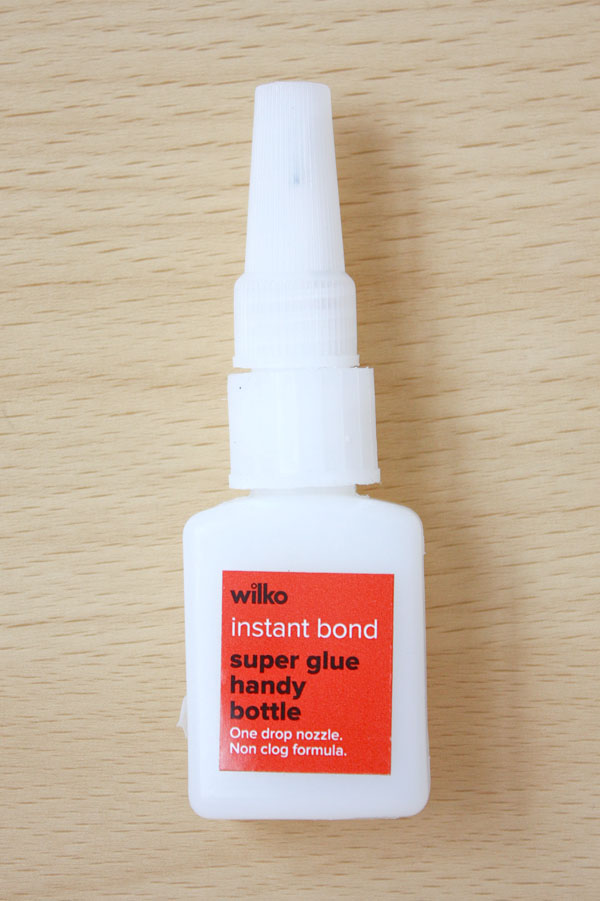 Superglue, or cyanoacrylate to give it the correct term, is a thin, liquid and very quick setting glue. If you ever glue your fingers together, this will be the stuff responsible. But most people are surprised to find out that its not that great for most jewellery making. In fact, I often joke that I am going to get a t-shirt made with ‘Superglue Ain’t That Super….’ on it. Its just too brittle to work on hard smooth surfaces. However it works brilliantly on fabrics and cords, because it sinks in and doesn’t create an ugly blob of glue.
Pro: Because of its watery consistency, it sinks into fabric and cord really well, stops cords from fraying. Also useful for providing a temporary bond and securing knots in elastic.
Con: Doesn’t hold great on shiny, non-porous surface like metal or plastic. Can easily stick to skin and damage surfaces.
E-6000 (E6000+ in the UK) is a thick, solvent based adhesive, that provides a strong bond. The original formula was discontinued here in the UK after some of the ingredients were banned, and the manufacturers came up with a new formula that met UK requirements. E6000+ isn’t as good as the original, but it certainly has less of an odour. E6000 It has a certain amount of flexibility after 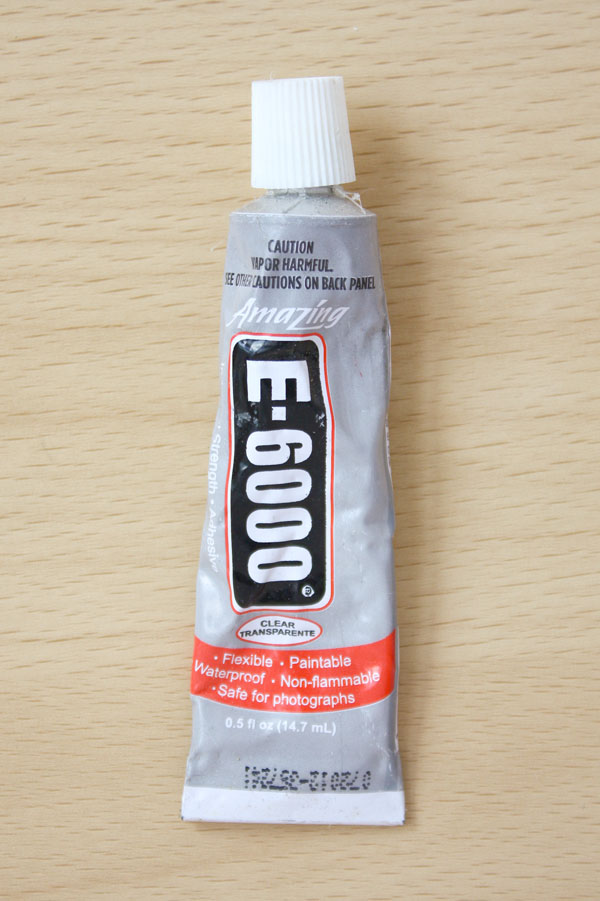 curing, can be sanded and painted over and generally works well on a variety of materials including metals, plastic and even rubber. A LOT of crafters swear by this glue however, in my experience, the bond isn’t as strong as that of a 2 Part Epoxy, especially when put under stress. I use E-6000 when I need a slightly flexible bond, but where its not the only thing holding the piece together. For example, gluing a cabochon on backing fabric when you are going to bead around the edge after. Because its solvent based, the standard E6000 formula really smells! And some of those chemicals are quite nasty, so make sure you use this with the windows wide open or outside.
Pro: One part clear glue, so no mixing required. Strong yet flexible bond.
Con: Solvent based, very strong smell. In my opinion isn’t as permanant a bond as 2 part epoxy.
 GS Hypo Cement is a great medium strength, flexible glue with a very fine precision nozzle. It is perfect to use when securing knots in callottes and sticking tiny gems into watch faces. Seems to work best when used on small areas that don’t get pulled on, knocked or put under stress.
Pro: Thin enough to sink into fabric and cord but thick enough not to run everywhere. Fine applicator nozzle. Dries clear and stays slightly flexible.
Con: Will not hold large surfaces (so isn’t great for gluing metal end caps onto braid) or when the objects will get knocked or put under pressure. Does have a fairly strong smell so use in a ventilated area.
There are some other craft glues that might have very specific uses in jewellery making, but are generaly unsuitable for metals and plastics as they won’t provide a secure bond. These include PVA White School glue and hot glue. I will write another post soon about choosing general craft glues.
If you have any questions about which glue to use for your jewellery making, please feel free to ask in the comments below or follow me on Instagram or Facebook. You can also get hold of a copy of my FREE Getting Started with Jewellery Makibng eBook by signing up to my email The Loop. Happy gluing!